Tackling Literacy in America
September 30, 2025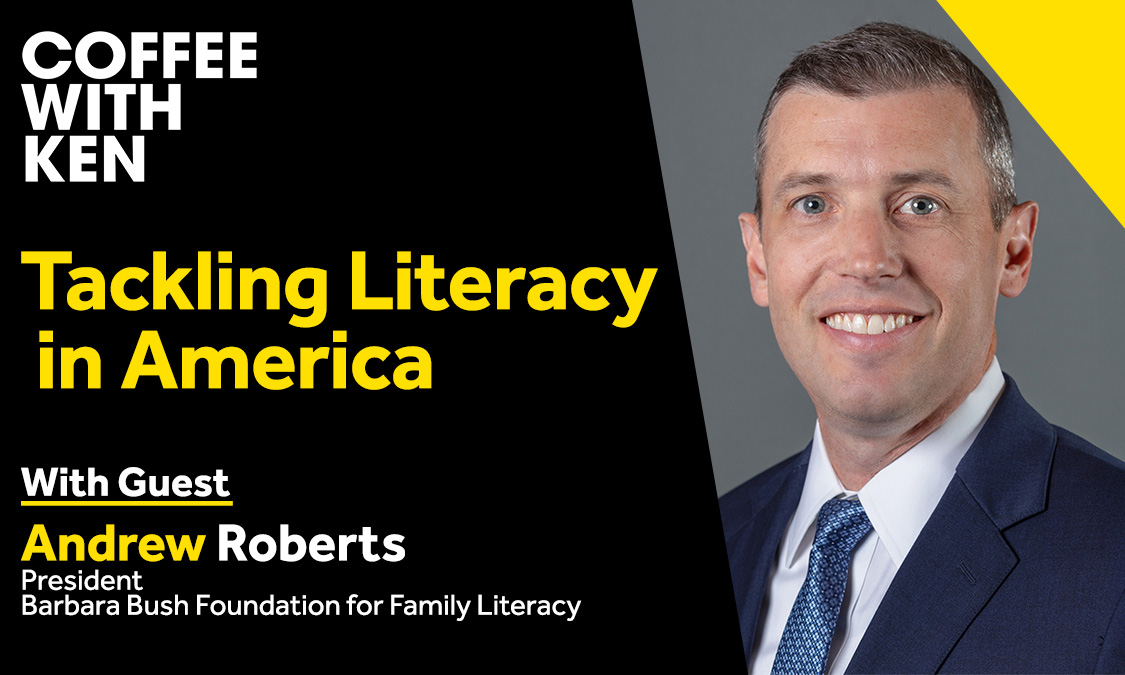
Literacy isn’t just about reading books—it’s about economic mobility, workforce readiness, public health, and even national security. In this Coffee with Ken conversation, Andrew Roberts, President of the Barbara Bush Foundation for Family Literacy, breaks down how low literacy costs the U.S. $2.2 trillion in GDP every year and limits opportunities across every sector of society.
In this discussion with Ken Biberaj, Andrew explores how tri-sector collaboration—government, business, and nonprofits working together—can scale proven interventions, from one-to-one tutoring and family literacy programs to employer-linked training and digital skills initiatives that prepare people for the jobs of the future.
Key Takeaways from the Conversation:
The Cost of Low Literacy
More than half of American adults read below a sixth-grade level, impacting the economy, workforce, and even national security.
A $2.2 Trillion Wake-Up Call
Low literacy drains trillions from the U.S. economy each year and contributes to poverty, unemployment, healthcare costs, and incarceration.
Tri-Sector Solutions
Government, business, and nonprofits must align on scalable interventions—mentorship, family literacy, workplace-aligned training—to move the needle.
Technology as a Tool (and a Challenge)
AI and digital tools can personalize literacy instruction and remove barriers, but must be designed with learners and teachers in mind.
Action at Every Level
From reading 15–20 minutes a day with a child to funding local programs, everyone has a role to play in closing the literacy gap.
Why This Conversation Matters:
“Literacy isn’t charity—it’s infrastructure. It shapes economies, builds talent pipelines, and underpins opportunity itself.” — Andrew Roberts, Barbara Bush Foundation
From classrooms to boardrooms, literacy impacts every aspect of society. This conversation is a roadmap for how we close the gap, strengthen communities, and invest in a more equitable and prosperous future.